

Paul, a heavy smoker, came to us with advanced gum disease and loose lower teeth. Through splint therapy and gum treatments, we extended the life of his remaining teeth by four years. When his teeth became too unstable, we replaced them with a durable lower bridge, which restored his ability to eat and smile confidently.
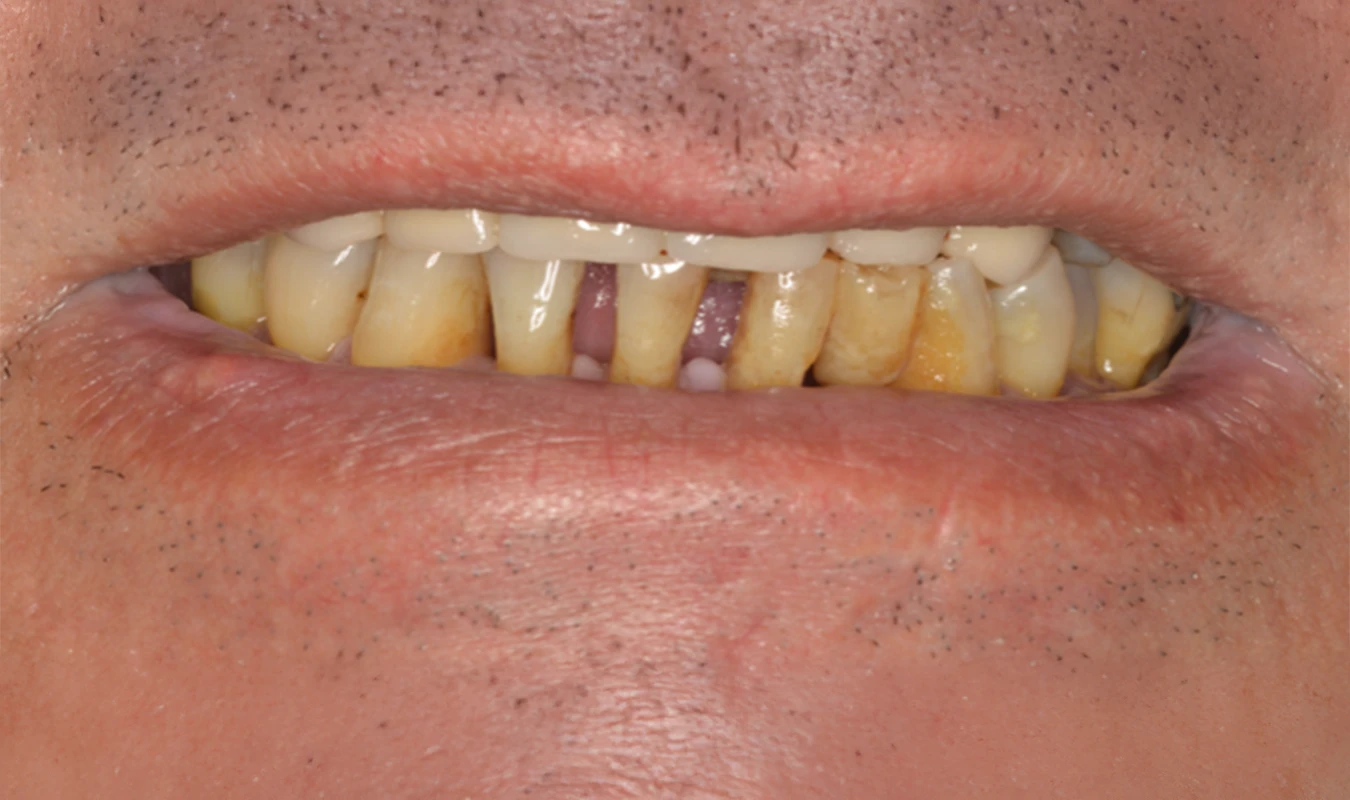
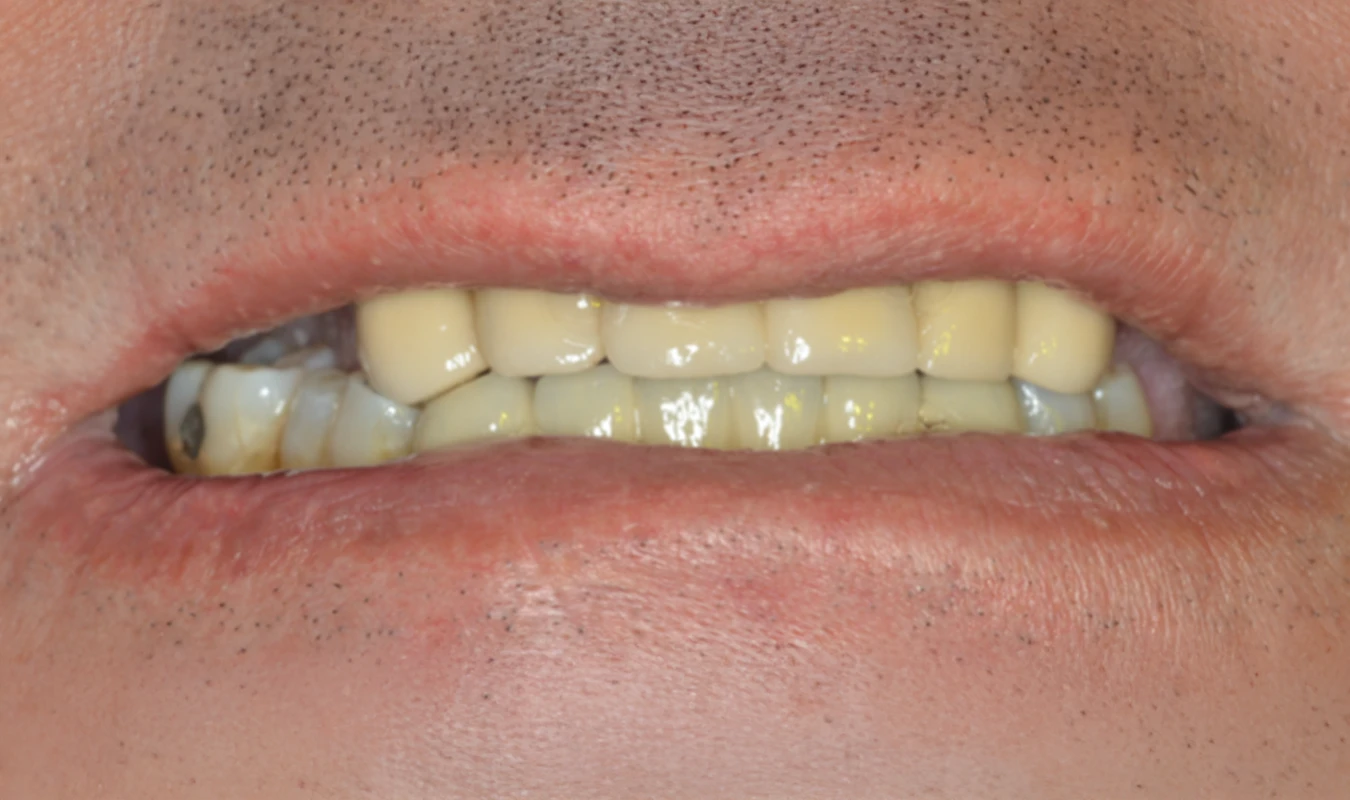
Paul came to us as a heavy smoker, suffering from advanced gum disease, with his lower four incisors becoming very loose. To preserve his teeth for as long as possible, we extracted one incisor and replaced it with a false tooth, which we splinted together with the remaining incisors. This fibre-reinforced resin-bonded bridge was a cost-effective solution that not only provided a bridge but also strengthened the remaining teeth by holding them together.
We started Paul on a series of gum treatments, and this combined approach allowed him to keep his lower incisors for an additional four years. Delaying the extraction of teeth that are not infected or associated with active disease helps preserve the jawbone and extends the treatment timeline for the patient.
During this time, we encouraged Paul to begin our smoking cessation program, which would have significantly improved his oral health. Unfortunately, he chose not to pursue this option. Nevertheless, the splint therapy and gum treatment extended the life of his lower incisors by four years. Eventually, however, the periodontal disease progressed, and the remaining three incisors became too mobile, rendering the splint ineffective.
Exploring Paul’s Treatment Options
At this stage, we presented Paul with the next phase of his treatment plan, which involved replacing his four incisors after the extraction of his remaining teeth. Given that Paul was a heavy smoker, he wasn’t a suitable candidate for dental implants, and he wasn’t psychologically ready to accept dentures. The best solution for Paul was a lower bridge.
We again encouraged him to consider a smoking cessation program, as quitting smoking would greatly benefit his oral and overall health.
What is a Bridge?
A bridge is a fixed dental prosthesis that uses a patient’s remaining teeth to support false teeth. Unlike dentures, a bridge is permanently attached and can’t be removed by the patient. However, bridges require cutting healthy teeth to fit the false teeth, and the larger the bridge, the more teeth need to be cut. This can increase the risk of more significant failure if the bridge becomes compromised. Therefore, before considering a bridge, it’s essential to explore more conservative options, such as implants, removable dentures, or resin-bonded bridges, which require minimal or no cutting of tooth tissue. Additionally, patients must demonstrate excellent oral hygiene, have the dexterity to clean effectively under their bridges, and be committed to regular check-ups and follow-up appointments.
Paul’s Treatment Process


